Why tree topping (especially conifers) is a bad idea
“Can’t we just shorten it?” – this is one of the most common requests for tall trees. Most often these are spruce, pine, or fir trees that reach 15–25 meters and seem too tall.
The typical solution is so-called tree topping – removing the top of the tree and leaving the rest of the crown. At first glance, this looks like a simple and cheap solution. In practice, however, topping often creates an even more dangerous tree.
Topping does not fix the tree. It only postpones the problem.
Within a few years, new leaders form, attachments weaken, and the tree becomes even riskier than before.
What happens after topping a conifer
When the main leader of a conifer is removed – whether at 5 meters or 20 meters – the tree loses its natural top. Existing lateral branches begin to take over the role of the new leader.
These branches start growing upward and “compete” with each other to become the new top. This often results in two, three, or more co-dominant leaders emerging from the same point.
This situation also occurs in nature – for example when wind or heavy snow breaks the top. The tree then continues growing with two or more leaders.
In a forest this usually isn't a problem. The tree has space around it and a failed top does not threaten roofs, fences, or utility lines. In a garden or near a house, however, such a tree becomes significantly more dangerous.
Instead of one stable leader, multiple tops form with weaker attachment. Over time they push against each other and shift the tree’s center of gravity. This is why topping conifers is problematic in the long term.
The problem is that these new leaders:
- do not grow from a natural terminal leader
- have weaker attachment to the trunk
- grow at an angle
- form co-dominant leaders over time
- shift the center of gravity away from the trunk axis
After 10–20 years, instead of one straight tree you may end up with two or three leaning “trees” at the top.
Removing the top also changes the mechanics of the entire tree. The natural leader helps stabilize the trunk, and once removed the tree begins to flex more in the wind. This is easy to observe in practice – lean a ladder against a tree with an intact top, then against the same tree after topping. The difference in flexibility is noticeable. The topped tree behaves “softer” and moves more in the trunk.
This effect increases over time. As weight distribution changes and new leaning leaders form, the tree moves more and stability decreases. Topping therefore does not solve the height problem – it often creates a tree that is less stable than the original.
This becomes a problem both for stability and for future removal. The center of gravity is no longer predictable and the tree behaves unpredictably.
In some cases, the risk caused by weak branch unions can be reduced without immediate tree removal. For structurally valuable trees, dynamic tree crown bracing using the Cobra system can help reduce the risk of failure in problematic leaders or branch unions.
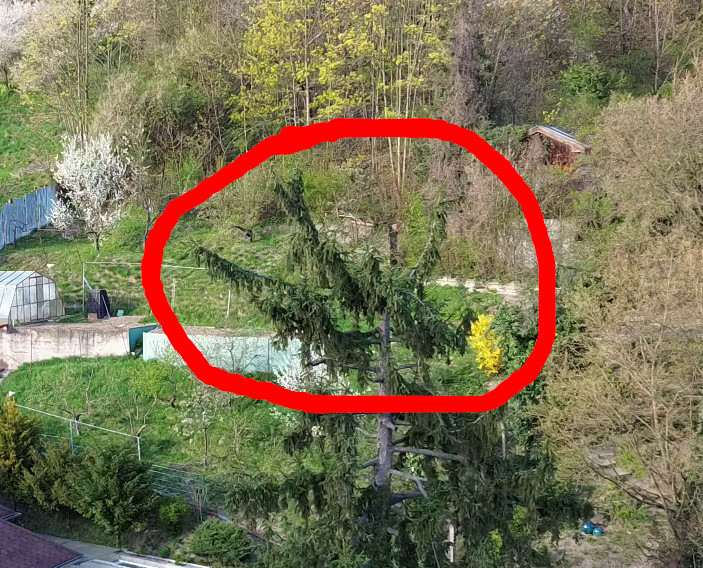
Co-dominant leaders and wood pressure
When two leaders grow from the same point, a co-dominant structure forms. The smaller the angle between them, the greater the pressure between them.
Each year, new growth rings push the leaders apart. At the attachment point, the following often develops:
- included bark
- weak structural attachment
- wood cracking
- risk of splitting in wind
Conifers handle these situations worse than deciduous trees. In strong wind, such a leader can simply break off.
Topping significantly complicates future tree removal
A tree with one leader has a predictable center of gravity. After topping, multiple leaders with different angles and weights form.
This means:
- harder to plan the direction of fall
- unpredictable behavior during cutting
- risk of rotation
- dangerous climbing conditions
Such trees often must be dismantled in sections. Why they cannot be safely felled from the ground is explained in the article why a tree cannot simply be cut from the bottom .
Topping deciduous trees is not just cut and done
Topping is more common with deciduous trees, but even here it is not a simple cut. A large wound creates a high risk of decay.
Proper technique includes:
- clean cut with sharp tools
- smooth surface without torn wood
- angled cut to prevent water pooling
- wound treatment using sealant or grafting wax when appropriate
If the cut is done poorly, water collects in the wound and decay begins. The tree may then gradually decline over several years.
Sealant is not used on conifers
Conifers react differently than deciduous trees. After cutting, they release resin which naturally seals the wound.
Therefore for spruce, pine, or thuja:
- wound sealant is not used
- wax is not used
- cuts must be clean and smooth
- tools must be sharp
Resin is aggressive and usually prevents fungi and insects from entering. However, this only works when cuts are clean and bark is not damaged.
Risk of bark tearing and barberchair
Topping also carries mechanical risks. If done incorrectly, it can cause:
- bark tearing down the trunk
- trunk splitting (barberchair)
- damage to structural wood
- permanent loss of stability
Such damage cannot be repaired and the tree remains hazardous.
Real example
The following example shows a deciduous tree that was improperly topped about four years ago. The tree attempted to produce new shoots but later began to decline.
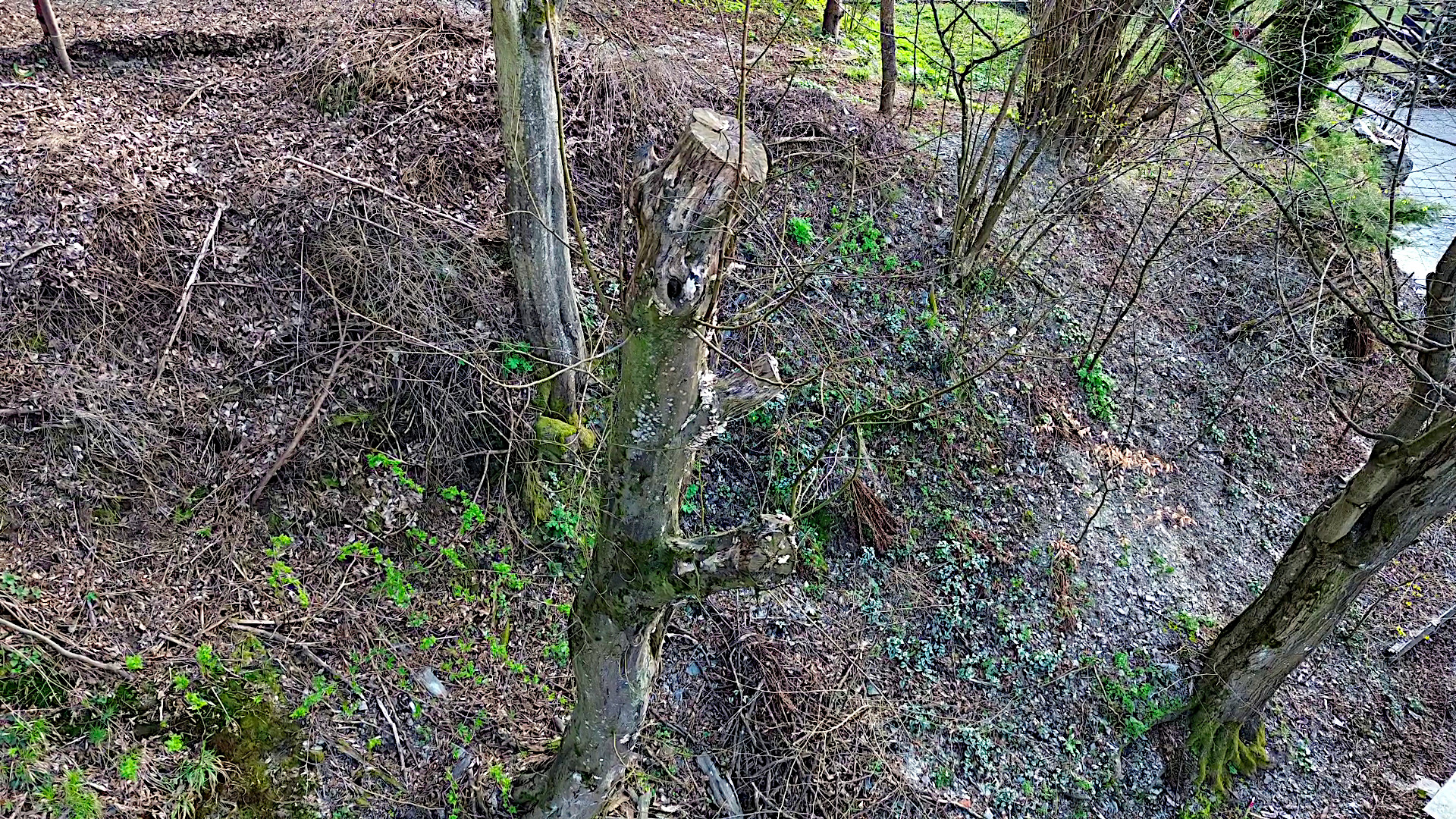
Topping often creates a tree that will become more dangerous over time.
Instead of one stable leader, multiple weak tops develop.
Conclusion
Shortening a tree may look like a quick solution. In reality, it often leads to weaker leaders, reduced stability, and more complicated removal later.
Especially for conifers, topping is usually just postponing the problem.
Want to know the best solution?
Send photos of the tree and surroundings — I will suggest a safe approach without unnecessary risks.
Contact