How Much Does Tree Removal Cost in Košice?
Straightforward tree removal can cost €150–€300. Dismantling a tree section by section near a house often costs several hundred euros; in exceptionally difficult conditions, it can exceed €1,000.
The price depends on the size and condition of the tree, the space around it and the agreed scope of work.
Indicative tree removal prices
The ranges overlap because the combination of conditions matters. They are not fixed prices based on height. In each quote, I account for any ground worker, travel and hired equipment needed, and specify what the price range includes. Taking wood and branches away is agreed separately.
Why a quote may differ from an online price
A “from” price or the word “complete” does not, on its own, tell you what your tree will cost. A short search result may not show the conditions, additional charges or the date the price list was updated. When you open the page, check whether the price is for pruning or removal and exactly what it includes.
Two trees of the same height can involve very different work. One can be felled in one piece into open space. The other stands over a roof, has several leaders and needs to be dismantled section by section, with the pieces lowered to the ground. Height alone, or a brief label such as “with obstacles”, does not capture that difference.
It is also important to distinguish between removing the tree, cutting up the wood, stacking branches, tidying up and taking the material away. Loading green waste does not necessarily include taking it away. If the price list has no update date, check that the prices still apply.
When comparing quotes, compare the method and scope of work. A lower price may reflect easier conditions or a more limited service. When working above a house, preparation, control over the movement of cut sections and protection of the surroundings also matter.
What stays on your property after removal
When pricing the job, we also agree on cutting up the wood and tidying up. Unless you ask for something different, this is how I usually work:
- Wood is cut into lengths of approximately 30–40 cm and stacked in a pile. We agree in advance if you want different lengths or prefer to cut it up yourself.
- Branches are stacked in an agreed place, all facing the same direction to make them easier to handle.
- Paving, paths or parking areas with sawdust left on them are swept after the work.
I do not normally take wood and branches away. They remain on the property; any collection and disposal is agreed and priced separately. When comparing quotes, check these details with the other contractor too.
Get a price range for your tree
Send photos of the tree and its surroundings, the location, and how you would like the wood and branches dealt with.
Send photos for an estimateWhat makes up the cost of a demanding removal
Removing a tree over a roof involves much more than making the final cut. Depending on the conditions, the crown needs to be dismantled gradually, individual sections secured, and their movement and lowering controlled. Each additional stem or main branch may mean repositioning and further preparation.
- Size and branching: the volume of wood, the number of main branches or leaders, and how often I need to reposition.
- Tree condition: dead or damaged wood and cavities can restrict the ways of working and affect the choice of equipment.
- Surroundings and access: a roof, fence, overhead lines, a slope or limited space for placing cut sections.
- People and equipment: a ground worker where needed, preparation time, rope systems, or a hired access platform or crane.
- Finishing work: the agreed log lengths, moving the wood, stacking branches and tidying up.
“Just cut it down; I will deal with the wood myself” can mean less work on the ground. With a tree over a house, the main part of the job remains: sectional dismantling and controlled lowering. Cutting the wood into metre-long sections rather than 30–40 cm lengths afterwards may therefore make little difference to the total price.
For a more detailed explanation, read Why a tree near a house cannot always be felled from the base.
Equipment and teamwork when working above property
For controlled lowering, I use ropes and equipment designed for the task, including Port-a-Wrap and LD2 lowering devices. My rigging ropes come with the relevant documentation and certification. I select equipment to suit each job, check its condition and respect its intended use and load limits.
A ground worker on this kind of removal is more than an extra pair of hands. We need agreed signals and clear roles for handling the rope, controlling cut sections and keeping the work area clear. Coordination between the person in the crown and the person on the ground is essential.
The value lies in the whole process: suitable equipment, correct use, preparation and coordination. If conditions call for an access platform or crane, we include that option in the proposed approach and estimate. The price can be adjusted by changing the scope of finishing work; that does not replace the precautions needed when working above a house.
You can see examples of my work on the Services page.
A practical example: removing hornbeams approximately 25 metres tall
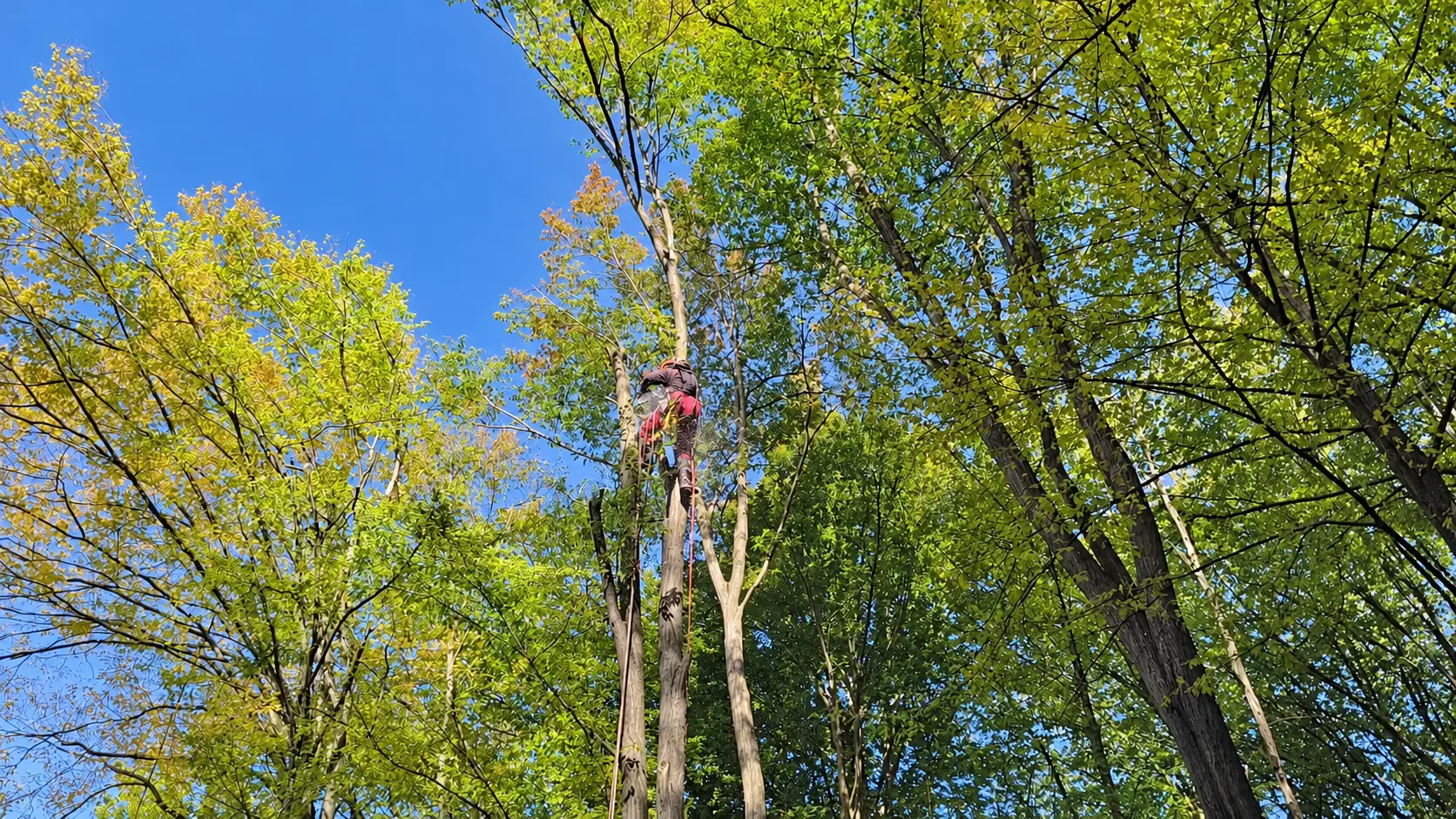
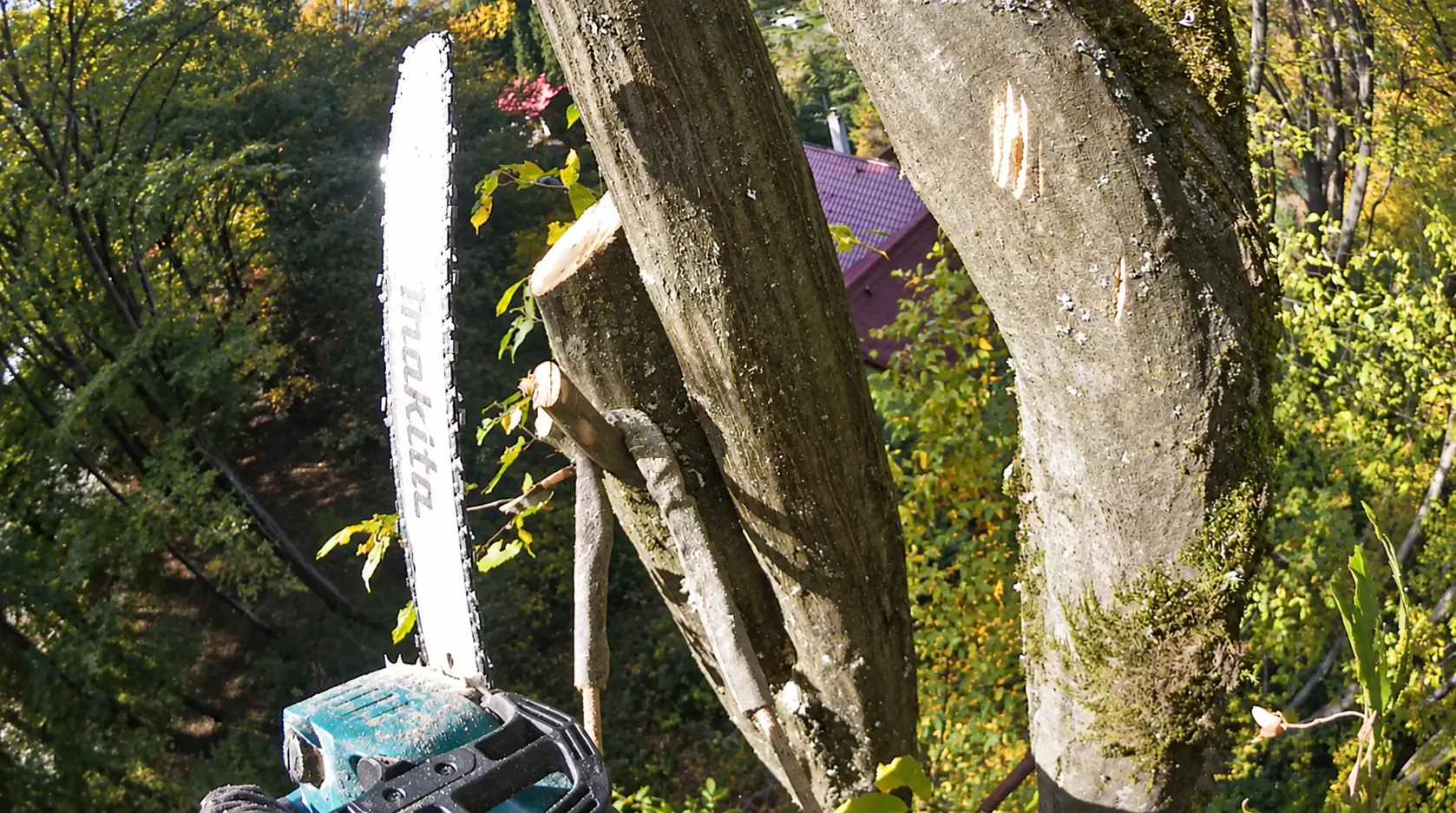
The hornbeams, affected by wood-decay fungi, stood on uneven, sloping woodland terrain near a house. Each had two or three leaders that needed to be dismantled individually. The work required climbing high into the crown and a ground worker. For the tree shown, its lean and proximity to the roof also influenced the approach. After removal, I cut the wood into lengths of approximately 30–40 cm and stacked it in one place.
The indicative price for this work is approximately €800 per tree. This is an estimate for this particular job, not an invoiced amount or a universal price for a 25-metre tree. It accounts for a ground worker, the uneven, sloping terrain, dismantling each leader separately, and subsequently cutting the wood into 30–40 cm lengths and stacking it in one place. Taking the material away is not included.
How to compare two quotes
If one quote is several hundred euros cheaper, first check whether it covers the same work. The difference may lie in the scope of the service, its organisation or the chosen method. The price alone does not tell you how the removal will be carried out.
- Working near the house: how will sections above the roof be removed, and how will nearby structures be protected?
- Cutting up the wood: will long sections be left where they land, or will the wood be cut up and stacked?
- Branches and tidying up: who will move them, and what condition will the site be left in?
- People and equipment: does the quote include any ground worker, travel and equipment hire needed? Are you expected to help?
- The price range: what does it include, and under what circumstances might it change?
A straightforward tree in an open space may involve relatively little work. For a complex removal near a house, it makes sense to focus on the proposed method, equipment, experience with similar situations and the agreed result.
Extra video: equipment for a demanding tree removal (2:26)
If you are considering doing the work yourself, it is worth considering the equipment and experience needed for the particular job. This older video of a pine removal near a house opens with the ironic message “Don’t pay an arborist”. It then shows some of the equipment used and its approximate prices at the time. It supplements this topic; it is not a tree-felling tutorial.
The prices in the video illustrate the cost of some of the equipment when it was made. They are not a current equipment price list or the price of this service. When you book a job, you pay for the specific work with the equipment and people needed; you are not paying the full purchase price of the equipment.
Frequently asked questions about pricing
Why might a quote differ from an online price list?
A starting price or the word “complete” does not, on its own, define the method or scope of the work. Check whether the price is for pruning or removal, which conditions it applies to, and whether it includes cutting up the wood, stacking branches, tidying up and taking the material away. If the price list has no update date, check that the prices still apply. I prepare each quote based on the conditions around your tree and the agreed scope of work.
How much does tree removal cost?
In my indicative examples, straightforward removal costs €150–€300, more demanding removal €250–€600, and hazardous sectional removal €300–€1,000. Exceptionally difficult conditions may bring the cost to €1,000–€2,000 or more. These are not fixed prices based on tree height; the specific range depends on the conditions and the agreed scope of work.
What does cutting up the wood and tidying up usually include?
Unless we agree otherwise, I cut the wood into lengths of approximately 30–40 cm and stack it in a pile. Branches are stacked in an agreed place, all facing the same direction to make them easier to handle. We sweep sawdust off affected hard surfaces, such as paving, paths or parking areas, after the work. We confirm the scope when pricing the job.
Does the price include taking the wood and branches away?
Taking the material away is not part of the standard scope. Wood and branches usually remain on the property in an agreed place. Any collection and disposal must be agreed and priced separately.
Will removal be cheaper if I cut up the wood myself?
Cutting up the wood yourself can reduce the amount of work on the ground. A tree over a roof still needs to be dismantled section by section and lowered in a controlled way. Savings on cutting up the wood afterwards may therefore account for only a small part of the total price.
Can you estimate the price from photographs?
Photos of the whole tree, its lower trunk, the surroundings and access can help me suggest an initial price range. Include the town or address and the scope of work you need. If the photos do not provide enough information to assess the conditions, we can refine the estimate after a site visit.
What to send for an estimate
- A photo of the whole tree and its lower trunk; if you can see damage or a cavity, include a close-up.
- Photos of the surroundings: the house, fence, overhead lines and space available for working and stacking wood.
- The town or address and information about access to the property.
- The scope you need: tree removal, cutting up the wood, stacking branches and any request to take the material away.
Based on the information, I will suggest an initial price range and approach. If the photos do not show everything needed, we will arrange a site visit. We will clarify both the scope and the price before work begins.
How much would your tree cost to remove?
Send me photos and a brief description. We will discuss the removal options and how you would like the wood, branches and tidying up handled.
Send photos for an estimate